About Cheat Engine
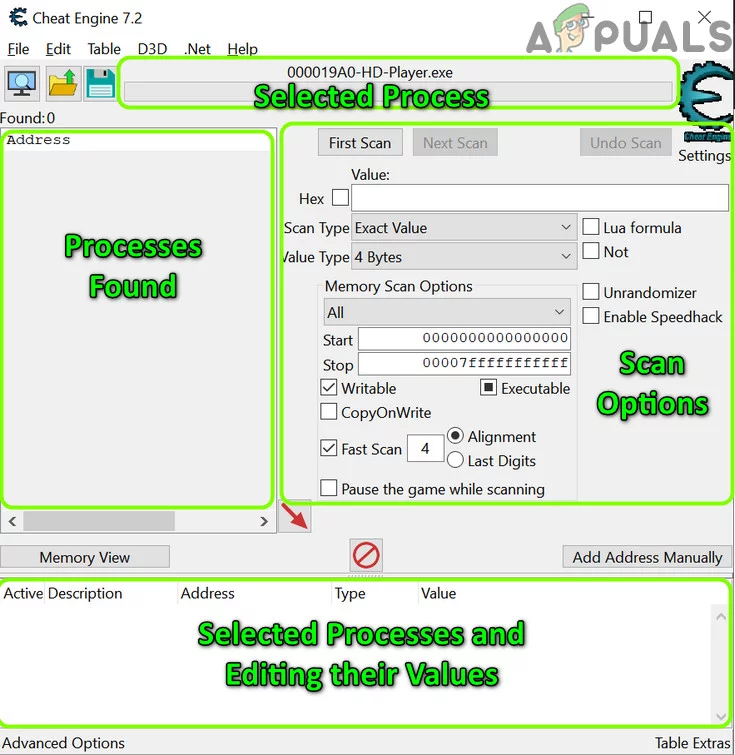
Cheat Engine is a tool designed to help you modify single-player games (without an internet connection) so you can make them harder or easier depending on your preference—for example, if 100 HP feels too easy, try playing with a max of 1 HP. It also includes other useful tools for debugging games and even normal applications, and helps you protect your system by letting you inspect memory modifications by backdoors; it can even unhide some of them from conventional means.
It comes with a memory scanner to quickly find variables used inside a game and change them. It also includes a debugger, disassembler, assembler, speedhack, trainer maker, Direct3D manipulation tools, system inspection tools, and more—all useful for programmers and software analysts.
Besides these tools, Cheat Engine has extensive scripting support (Lua), so experienced developers can build their own applications and share them with others.
For new users, it is recommended to go through the tutorial that comes with Cheat Engine (you can find it in your programs list after installing) and at least reach step 5 for a basic understanding of how to use it.
Note: Cheat Engine will most likely not work on online games, so don’t bother asking about that. The source code is visible for everyone; you are welcome to compile your own version for private use. For more information, see the Cheat Engine Wiki.
Typical use cases
Cheat Engine is commonly used to: find and change health, ammo, money, or other stats in single-player games; speed up or slow down game time with Speedhack; create and share cheat tables (.CT) or standalone trainers; learn about memory, pointers, and assembly; debug or analyze how applications work; and inspect Mono/.NET games (e.g. Unity) for classes and fields.
What Cheat Engine is not
CE is not a tool for cheating in online games—server-side data cannot be reliably changed from the client. It is not a crack or bypass for paid content; use it only in ways that respect licenses and terms of service. It is not guaranteed “undetected” by anticheat systems; use at your own risk in any environment that checks for such tools.
Learning path
Start with the built-in tutorial (steps 1–5 minimum). Then try finding a simple value (e.g. health or gold) in a game you own. Next, learn about pointers so your cheats survive restarts. From there you can explore Auto Assembler for code injection, Lua for scripting, and Mono for Unity games. The Glossary and Tips pages on this site, plus the Wiki and forum, support the whole journey.